 Space Explorer Quiz
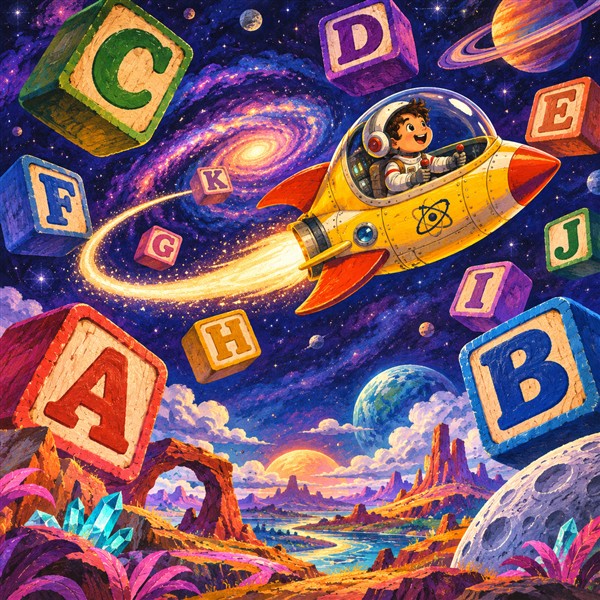 Space Word Search
 Ocean Spelling
 Dinosaur Spelling
Space Spelling guide
Write a label for a space mission
A wheeled robot exploring another world is a ROVER. Say it aloud, check its first and last letters, then fill the missing places. A rocket, a rover, and a probe can all be part of a mission, so the most specific phrase in the clue matters.
Use the clue and the letter pattern together
Say a possible answer, count its letters, and check it against the letters on the screen. Type the complete word into the answer box. When a guess is close, compare its beginning and ending with the answer shown. A missing double letter or an extra vowel is a specific thing to watch for on the next turn.
Starter leaves more letters visible. Challenge hides everything after the first letter and draws from longer words. The optional letter clue names the beginning, ending, and length. A partner can read the meaning aloud while the player works out the spelling.
Three space words to practise
Cover the middle of each word while leaving its beginning and ending visible. Read the meaning, say the whole word, and write the hidden letters on paper. Lift your hand to check. If you missed a letter, circle just the part that changed. On your next attempt, focus on that part before trying to spell the entire word from memory.
- COMET
- An icy object that can develop a tail near the Sun.
- ORBIT
- The path one object takes around another in space.
- ROVER
- A wheeled explorer sent to investigate another world.
Use all three words to set a challenge for your next player. They can describe one without naming it, draw a clue for another, and spell the last one aloud. Switch jobs when all three have been identified. If a drawing is easy to confuse with a different word, add a detail that narrows the choice.
Plan a mission around one question
Choose a question for your crew before opening a game. You could ask how objects move, what they are made of, or what tool you would send to explore them. A comet, a planet, and a rover are all space words, but only one is a vehicle. Sorting terms by their role helps a long list turn into a picture of a mission.
Try it together
Give a friend an equipment label with two letters erased. Let them ask one question about its job.
Stay with space in Space Explorer Quiz, or try the same activity in a new setting with Ocean Spelling.
Trusted sources and further learning
Wonderplay uses age-appropriate summaries and checks topic facts against authoritative science, museum, and education resources.